
Security & Access
Intruder Alarm Systems in GlasgowFor Central Scotland Properties
Protect the rooms, entrances and assets that matter with an intruder alarm matched to your property and daily routine. A free survey gives you a clear installation plan and project quotation, without having to work out detector positions or system settings yourself.
Free, no-obligation site survey
FIA Registered
BAFE & SSAIB in progress
£10m Insured
Public & employers' liability
Up to 3-Year Warranty
When we install & maintain
24/7 Call-Outs
Day or night
Service overview
Know when unwanted entry needs your attention
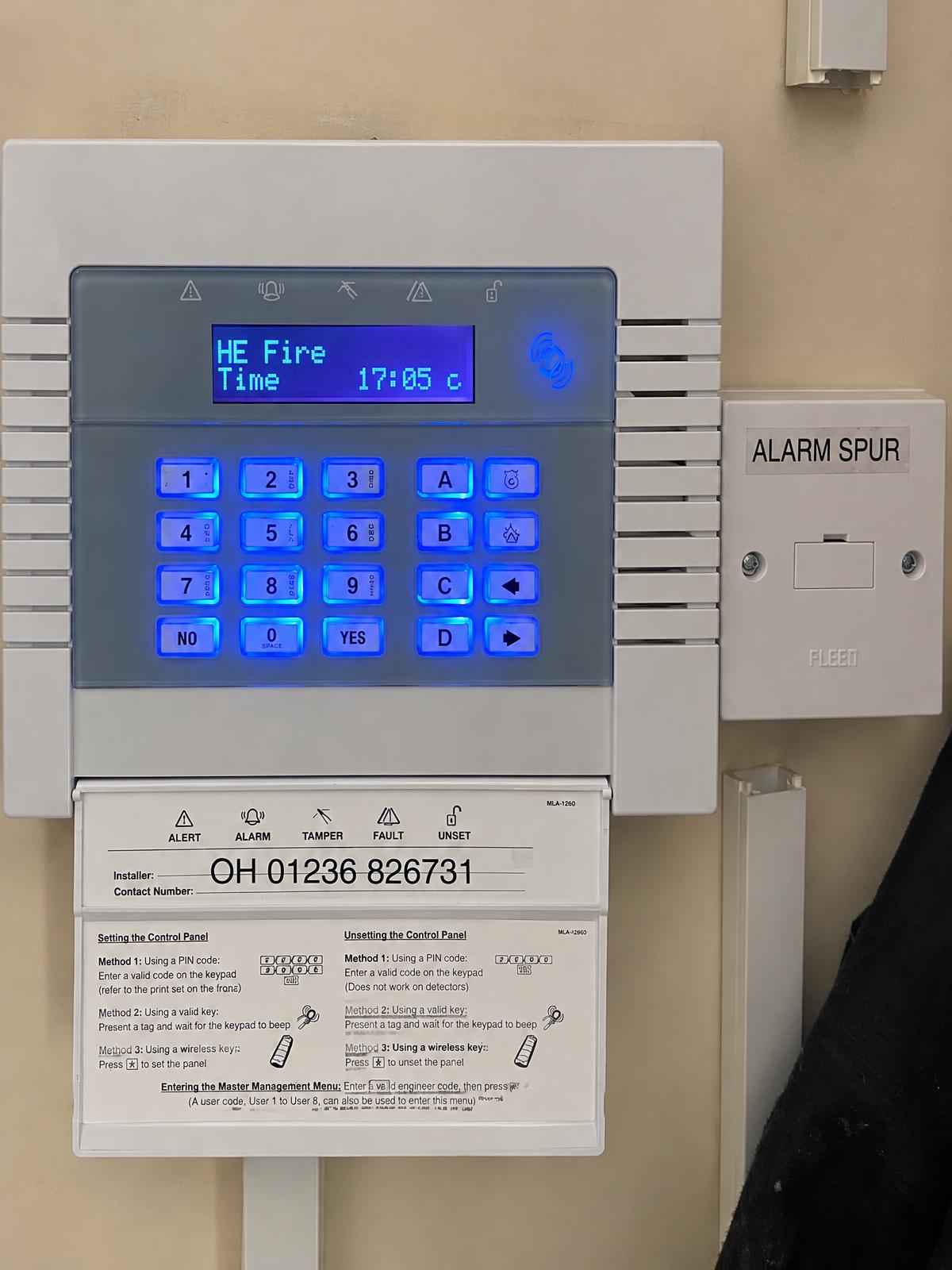
An intruder alarm detects selected signs of unauthorised entry and raises an alert through the agreed warning or signalling arrangements. H.E Fire & Security installs systems for homes, commercial premises and industrial properties across Glasgow and Central Scotland. We start with the entrances, internal layout and how people normally move around the building.
The right time to review security is often before moving in, opening a business, extending premises or changing working hours. An older alarm may also need attention if setting it has become unreliable, users share codes or detection no longer matches the occupied space. Equipment should fit your routine rather than create daily reasons to leave it unset.
Professional planning connects the risk assessment, equipment choice, installation and handover. We explain detection options, practical setting arrangements and any proposed monitoring so you understand what protection is being provided. Based in Kilsyth, our four engineers and two admin staff support a clear process from free initial site survey to testing and everyday use.
The cost of waiting
When intruder alarm systems do not match the risk
An alarm only helps when the design matches the property and people can use it consistently. Uncovered entrances, unsuitable detectors and confusing setting routines leave gaps that a visible bell box cannot resolve. Reviewing the whole arrangement helps separate genuine equipment faults from problems caused by the layout or everyday activity.
Unprotected entry routes
A system focused on a few obvious rooms can miss accessible doors or other routes. The survey needs to consider how entry could occur and where detection is required.
Avoidable false alarms
Poor detector positioning, movement or unsuitable environmental conditions can cause unwanted activations. Repeated alerts waste time and can weaken confidence in the system.
Protection left unset
Complicated controls or poorly planned entry routes can discourage regular use. Security needs to work around authorised users without relying on repeated bypassing of important areas.
Unclear incident response
An alarm signal does not establish who will investigate or what action follows. Without a workable contact and response plan, an alert may leave people uncertain about their next step.
Common mistakes we see
- Choosing detectors solely by room count without considering entry routes and occupancy.
- Assuming every wireless device will communicate reliably through every wall or floor.
- Sharing one user code indefinitely instead of reviewing access when circumstances change.
- Expecting an app notification or external sounder to guarantee police attendance.
Our process
How We Deliver Intruder Alarm Systems
- 01
Survey the property and routine
We review accessible areas, existing equipment, occupancy and likely entry routes. Pets, opening hours, deliveries and overnight use are discussed because these details affect both detection choices and reliable everyday setting.
- 02
Design detection and response
We propose the equipment, setting arrangements and any monitoring suited to the agreed requirements. Your project quotation explains the scope so the proposed protection and any exclusions are understood before installation starts.
- 03
Install the agreed system
We fit devices and controls in the planned positions, coordinating access and cable routes where needed. Device placement takes account of the environment rather than simply choosing the easiest surface to reach.
- 04
Test alarms and user operation
We verify detector operation, entry and exit arrangements, warning outputs and agreed signalling. We also check the intended user sequence so a technically functioning system is practical to set and unset.
- 05
Handover with warranty details
We demonstrate everyday use and explain fault reporting and maintenance needs. New installations have a one-year warranty; systems installed and maintained by H.E Fire & Security have a three-year warranty.
What you get
The Benefits, in Plain Terms
Faster awareness of unwanted entry
Detection and agreed signalling draw attention to suspicious entry without depending entirely on someone noticing damage or an open door later.
Safer incident decisions
A defined response arrangement helps occupants or keyholders decide what to do without assuming they should enter a potentially unsafe property alone.
Longer useful system life
Suitable device positions, accessible equipment and planned maintenance help preserve performance as batteries, occupancy and the condition of the property change.
Fewer avoidable call-outs
Careful detector selection and sensible user routines reduce common causes of unwanted activations, saving the time spent investigating preventable alarms.
Protection people actually use
Clear entry routes and practical controls make consistent setting easier, reducing reliance on memory, improvised workarounds or leaving troublesome areas bypassed.
Confidence while away
Knowing the agreed detection coverage, contact arrangements and maintenance responsibilities makes it easier to leave the premises with a clear plan in place.
In depth
Planning intruder alarm systems around your building
Related services
Wired, wireless and hybrid intruder alarms
Wired alarms connect devices through cabling, while wireless systems use radio communication and device batteries. Hybrid arrangements can combine the two where suitable. Existing cable routes, the building structure, installation disruption and future changes all influence the decision; there is no universal best option for every Glasgow property.
Wireless equipment still needs a properly assessed communication path and ongoing battery care. Wired equipment needs suitable cable condition and installation routes. We review these practical details during the survey, explain any limitations and avoid treating an existing cable or a claimed wireless range as proof that the proposed arrangement will work.
Door contacts, movement detection and setting arrangements
Door contacts can detect the opening of protected entrances, while movement detectors monitor selected internal spaces. Other detection may be appropriate depending on the assessed risk. Positioning matters: heat sources, movement outside the intended area and activity within the premises can affect the suitability of a particular detector or location.
Part-setting can allow selected areas to remain protected while authorised people occupy other parts of the property, where the design supports it. Entry and exit routes need careful programming and a clear demonstration. We discuss everyday scenarios such as arriving late, opening the business and moving through the building at night before finalising the arrangement.
Standards, security grades and insurance requirements
The BS EN 50131 series covers intrusion and hold-up alarm system requirements, with system grading reflecting assessed risk and equipment requirements. A suitable specification should consider the property, assets and any relevant insurer conditions. More devices or a more complicated control panel do not automatically mean an appropriate security grade has been achieved.
If your insurer specifies alarm certification, signalling or response conditions, share those requirements before accepting a proposal. H.E Fire & Security has £10m public liability and employers' liability insurance. SSAIB and BAFE accreditation are in progress; do not assume that an installation includes a particular certification or police response arrangement unless that is expressly confirmed.
Domestic routines and commercial access patterns
For homes, the practical design may need to account for pets, family members returning at different times and occupied bedrooms overnight. Security that creates repeated nuisance activations can become a burden. Discussing those routines early helps establish sensible detection and setting options without promising that any detector will ignore every animal in every situation.
Commercial premises may have cleaners, deliveries, multiple keyholders and areas that close at different times. Industrial buildings can add temperature changes, airborne contamination or large open spaces. The system needs to reflect those conditions, with access permissions and setting responsibilities reviewed when staffing or the use of the property changes.
Monitoring, alerts and maintaining a response plan
An audible warning, an app alert and monitored signalling perform different roles. We offer 24/7 monitoring and explain appropriate options for the proposed system. Internet or mobile connectivity, power resilience and the agreed response procedure need consideration; a phone notification alone should not be described as guaranteed incident attendance.
Keep authorised contact information current and review who can access the building after an alarm. Planned maintenance helps identify equipment problems and changes that affect detection. If the system develops a fault, use the agreed support route rather than repeatedly bypassing devices without understanding what protection is being lost.
Intruder Alarm Systems Across Central Scotland
FAQ
Intruder Alarm Systems Questions
We offer a free initial site survey and quote each project individually. For intruder alarm systems, the quotation depends on the property layout, equipment requirements, existing installation, access and the agreed scope. We explain the proposed work before you decide, rather than giving a fixed price that may not reflect your building. Let us know about any drawings, insurer conditions or planned alterations before the survey.
Free site survey · No obligation
Know when unwanted entry needs your attention
Book a free initial site survey with our Kilsyth team. We will explain the practical options and quote for your project before you commit. Call 07380 866221 to discuss intruder alarm systems in Glasgow or Central Scotland.
4 engineers · FIA registered · £10m insured