
Security & Access
CCTV Systems in GlasgowFor Central Scotland Properties
Get useful views of your entrances, boundaries and working areas with CCTV planned around the evidence you need. We handle the survey, camera layout and commissioning, then show you how to find footage without making everyday playback a technical task.
Free, no-obligation site survey
FIA Registered
BAFE & SSAIB in progress
£10m Insured
Public & employers' liability
Up to 3-Year Warranty
When we install & maintain
24/7 Call-Outs
Day or night
Service overview
See the detail you need when an incident happens
CCTV uses cameras and recording equipment to capture selected areas for observation and later review. H.E Fire & Security designs and installs systems for homes, commercial sites and industrial properties across Glasgow and Central Scotland. A useful system starts with a clear purpose: seeing activity, recognising a person and reading detail are not identical requirements.
You may need new cameras after a security incident, when opening premises, changing a yard layout or finding that existing recordings cannot answer basic questions. Homeowners may want entrance views, while businesses may need coverage of access points or areas where incidents require investigation. The survey considers those objectives alongside lighting, privacy and the practical recording arrangements.
Professional installation joins camera selection, mounting positions, storage and user access into one workable design. We assess the view at each location rather than simply adding more cameras. From our base in Kilsyth, our team of four engineers and two admin staff helps you move from a free initial survey to a tested system and a clear demonstration.
The cost of waiting
When cctv systems do not match the risk
A camera can show a wide area without recording the detail needed after an incident. Poor lighting, an unsuitable angle or missing footage may only become obvious when someone tries to investigate. Planning around real viewing and recording needs helps avoid a system that looks reassuring on a live screen but disappoints during playback.
Unusable identification detail
A distant subject may occupy too little of the image for useful recognition. Headline resolution alone does not resolve an unsuitable lens, position or field of view.
Weak night-time coverage
Glare, reflections and changing light can obscure important areas after dark. A daytime demonstration does not establish how useful the same view will be at night.
Missing or overwritten footage
Storage capacity, recording settings and equipment faults affect what remains available. Without a considered retention plan, footage may be overwritten before an incident is reported.
Unnecessary privacy exposure
Cameras that capture beyond their purpose can affect neighbours, staff or visitors. Uncontrolled access to footage also creates risks beyond the original security concern.
Common mistakes we see
- Choosing cameras by megapixels alone instead of defining the required view and detail.
- Positioning a camera where lights, reflective surfaces or nearby objects spoil night images.
- Assuming remote viewing will work without checking connectivity and access security.
- Setting a retention period without considering storage capacity, purpose and privacy obligations.
Our process
How We Deliver CCTV Systems
- 01
Survey the site and objectives
We walk through the areas you need to see and discuss past incidents, access points and lighting. Existing cabling, connectivity, recording equipment and privacy boundaries help establish what can sensibly be retained or improved.
- 02
Design views and recording
We propose camera positions, equipment and recording arrangements around the agreed purpose. Your project quotation explains the scope, with remote access and storage considerations discussed rather than left as assumptions after installation.
- 03
Install cameras and equipment
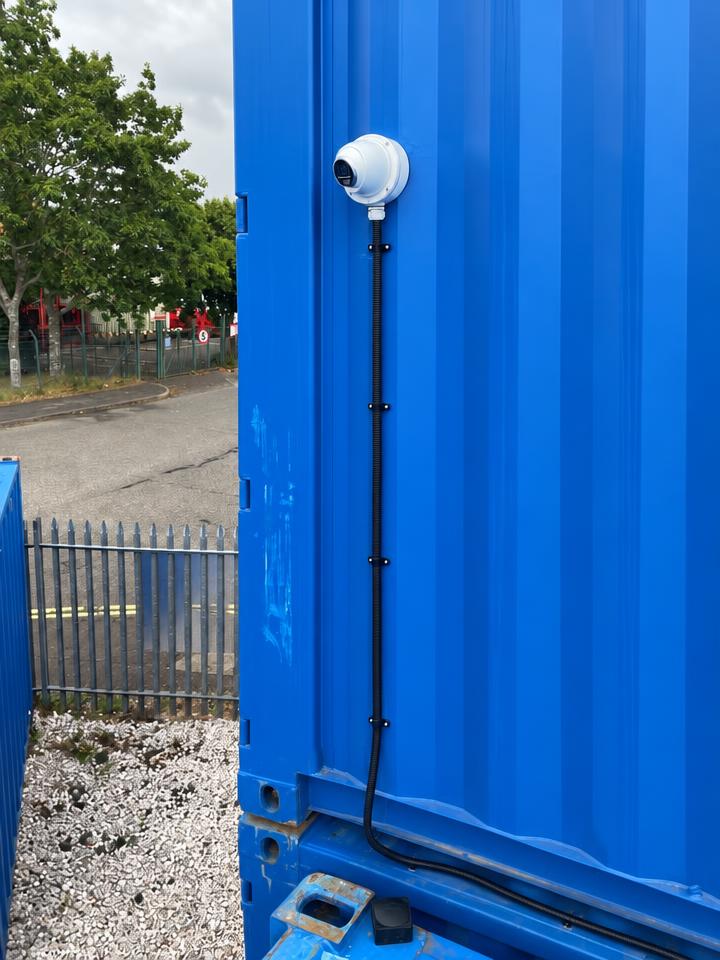
We coordinate access, mount cameras and install the agreed cabling and recording equipment. Positioning considers the intended view, practical maintenance access and environmental conditions, not just the appearance of the building frontage.
- 04
Verify images and playback
We check the camera views, recording operation, time settings and agreed access arrangements. Lighting limitations are discussed, and playback is demonstrated so you can confirm that the recorded system supports the intended use.
- 05
Handover and explain care
We show authorised users how to review and export recordings and report faults. A one-year warranty applies to new installs, with three years on systems installed and maintained by H.E Fire & Security.
What you get
The Benefits, in Plain Terms
Quicker incident review
Purposeful camera views and a playback demonstration help authorised users find relevant activity rather than searching through poorly labelled views without a clear starting point.
Safer information gathering
Viewing an area remotely can help assess a concern before deciding what action is appropriate, without assuming cameras remove the need for safe incident procedures.
More useful long-term coverage
Suitable equipment locations and maintainable cable routes support cleaning, adjustment and future repairs as the site and its security priorities develop.
Better use of the budget
Designing each view around a specific purpose avoids paying for extra cameras that duplicate coverage while leaving the important detail unresolved.
Dependable recording checks
Verification of recording, playback and access addresses the parts that matter after an incident, not only whether a live picture appears during installation.
Clear control of your footage
A practical handover helps you understand authorised access, retention settings and routine checks, reducing uncertainty about what the system is recording and who can see it.
In depth
Planning cctv systems around your building
Camera types, lenses and useful image detail
Camera housings and lens choices suit different mounting conditions and viewing goals. A wide view may help show general activity, while a narrower view can concentrate useful detail around an entrance. The design should establish what you need to observe before selecting a camera, rather than assuming the widest possible image provides the best evidence.
IP camera systems carry video over a network, with recording and power arrangements selected for the site. Existing systems may offer reuse opportunities, but compatibility and condition need checking. We explain practical upgrade options, including whether retaining some components would limit the intended image quality, reliability or future support.
Lighting, outdoor positions and night-time images
Outdoor CCTV needs to account for rain, dirt, seasonal vegetation and changing light. A camera looking towards a bright entrance or vehicle headlights may produce an unhelpful view if the position and image settings are unsuitable. Mounting height also matters: a view of the top of someone's head may not meet the intended identification objective.
Infrared illumination can help in low light, but nearby walls, glass, cobwebs or reflective objects can interfere with the picture. Some locations need additional lighting or a different camera position. We discuss these constraints during planning and verification rather than promising that a night-vision label guarantees a clear face at any distance.
Recording retention, remote access and system security
Recording duration depends on storage, camera settings, activity and the recording schedule. The appropriate retention period should follow the actual purpose and relevant privacy obligations, not an arbitrary promise to keep everything indefinitely. Playback and export procedures need to be understood before an incident, particularly when more than one person is responsible for the system.
Remote viewing can make checking a site more convenient where the agreed system and connectivity support it. Access should be limited to authorised users, with sensible account security and ongoing attention to supported updates. CCTV is not made secure simply by placing it on a network; the installation and its ongoing management both matter.
BS EN 62676 and responsible CCTV use
The BS EN 62676 series provides a framework for video surveillance systems used in security applications. Design should relate camera performance and image detail to an operational requirement. A quoted resolution is not a substitute for checking whether a recorded subject is large and clear enough in the relevant scene to serve the agreed purpose.
UK data protection rules can apply to CCTV, including domestic cameras that capture beyond a property boundary. Businesses need to consider a lawful purpose, suitable information for people being recorded, access controls and retention. We can discuss practical camera positioning, but the organisation operating the system remains responsible for its legal obligations and procedures.
Homes, workplaces and changing security priorities
A domestic installation might focus on an entrance, driveway or garden access, with care taken to avoid unnecessary neighbouring views. A workplace may need coverage around deliveries, public entrances or stock handling. Audio recording raises additional privacy concerns and should not be treated as a default feature simply because a device supports it.
When fences, parking spaces or working areas change, review the coverage rather than assuming the original layout still works. Trees can grow into a view and new lighting can alter night images. Routine checks, lens cleaning and a review after physical changes help preserve usefulness without replacing a whole system unnecessarily.
CCTV Systems Across Central Scotland
FAQ
CCTV Systems Questions
We offer a free initial site survey and quote each project individually. For cctv systems, the quotation depends on the property layout, equipment requirements, existing installation, access and the agreed scope. We explain the proposed work before you decide, rather than giving a fixed price that may not reflect your building. Let us know about any drawings, insurer conditions or planned alterations before the survey.
Free site survey · No obligation
See the detail you need when an incident happens
Book a free initial site survey with our Kilsyth team. We will explain the practical options and quote for your project before you commit. Call 07380 866221 to discuss cctv systems in Glasgow or Central Scotland.
4 engineers · FIA registered · £10m insured