
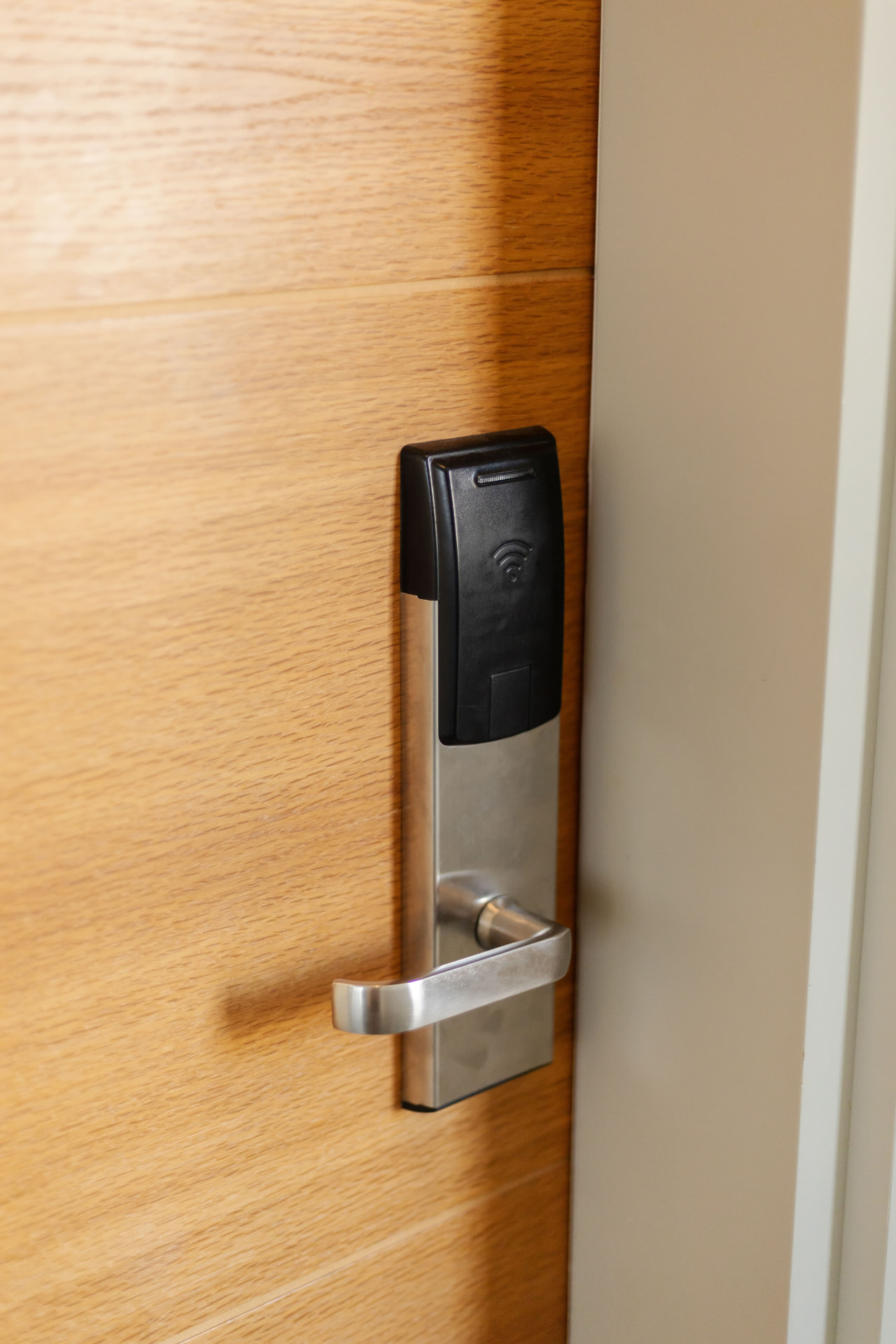
Security & Access
Door Entry & Access ControlFor Glasgow & Central Scotland
Let the right people in while making everyday entry simpler for occupants and staff. A free site survey turns your access requirements into an explained proposal, with permissions, visitor entry and safe escape considered together.
Free, no-obligation site survey
FIA Registered
BAFE & SSAIB in progress
£10m Insured
Public & employers' liability
Up to 3-Year Warranty
When we install & maintain
24/7 Call-Outs
Day or night
Service overview
Understand your door entry & access control options
Door entry helps occupants decide whether to admit a visitor, typically through an audio or video conversation. Access control manages entry using credentials such as cards, fobs or codes. The two can work together, but they solve different problems: verifying a visitor is not the same as managing ongoing permission for regular users.
H.E Fire & Security works with domestic, commercial and industrial properties across Glasgow and Central Scotland. A shared residential entrance, office corridor and industrial access point each need a different approach. We consider the people using the door, the level of control required and the practical operation of the existing door hardware before proposing equipment.
A review is useful when keys are repeatedly lost, staff permissions become difficult to manage or an existing intercom is unreliable. Refurbishment and changes in occupancy are also good opportunities to check the arrangement. Professional design matters because security equipment must work with the door and its escape requirements, not create an obstacle when someone needs to leave.
The cost of waiting
Control entry without compromising escape
A reader or intercom only works well when the whole doorway has been considered. The locking hardware, power supply, user permissions and exit arrangements must fit the building. Otherwise a security improvement can create a new operational or safety problem.
Permissions that outlast employment
Shared codes and unreturned keys make it difficult to know who can still enter. Access arrangements need a practical way to remove permissions when staff, contractors or occupants leave, rather than relying on informal reminders.
Doors that fail to secure
A functioning reader cannot compensate for damaged hinges, a poor closer or an unsuitable lock. Door condition and alignment need assessment so authorised access does not end with the entrance standing unintentionally open.
Confusing visitor access
Visitors may hold doors open or follow others inside when the entry process is unclear. Suitable communication and understandable controls help reduce frustration, although equipment cannot remove the need for sensible visitor management.
Escape obstructed by security
People must be able to leave in accordance with the building’s requirements. Lock behaviour, exit hardware and any necessary fire alarm interface must be assessed, not improvised after a reader has already been fitted.
Common mistakes we see
- Issuing one permanent code to everyone and having no plan for changing it when permissions change.
- Selecting locking hardware without checking door construction, condition and escape requirements.
- Assuming a video intercom prevents tailgating or replaces a visitor management procedure.
- Adding a fire alarm connection without specifying the required door behaviour and testing the interface.
Our process
How We Deliver Door Entry & Access Control
- 01
Survey doors and daily use
We begin with a free initial site survey, discussing users, visitor routes and current problems. We assess the door arrangement and available information about escape requirements so the proposed system reflects both security and everyday movement.
- 02
Design permissions and door operation
We explain suitable entry methods, locking arrangements and administration options. Your project quote defines the work, including any required door repairs, interfaces and power arrangements. We agree who will manage permissions rather than leaving that responsibility unclear.
- 03
Install and configure the system
The agreed equipment is installed and configured for the intended users and door operation. Where credentials or shared codes are used, the setup should follow your permission plan rather than giving every user unnecessary access to every controlled area.
- 04
Verify entry, exit and interfaces
We test authorised entry, refusal where appropriate, exit operation and the specified behaviour under relevant conditions. Any agreed fire alarm interface needs coordinated testing. We also check that the physical door closes and secures as intended, not just that a reader recognises a credential.
- 05
Hand over controls and warranty details
We explain day-to-day administration, visitor entry and fault reporting, with relevant records for the completed work. New installs have a one-year warranty, extended to three years for systems installed and maintained by H.E Fire & Security. Confirm cover for any retained existing equipment.
What you get
The Benefits, in Plain Terms
Quicker permission changes
Suitable access control can make it easier to add and remove users without collecting every physical key. The benefit depends on choosing an administration method your responsible staff can actually use and keeping records current.
Security and safe exit considered together
The design considers how people enter and how they leave. This helps avoid the false choice between an easily bypassed door and an entrance that creates difficulties for occupants during an emergency.
Less avoidable wear and misuse
Matching locks and controls to the door and intended use reduces the temptation to force, prop or repeatedly override it. Physical maintenance remains necessary because electronic controls do not eliminate wear in closers, hinges and locking parts.
More targeted improvements
Assessing the doorway first can identify a closer or alignment fault that a new intercom alone would not solve. A project-specific scope helps you direct spending towards the actual problem instead of replacing unrelated equipment.
Consistent rules for regular users
An agreed permission structure makes access less dependent on informal key sharing. Different areas can be considered according to genuine operational need, with a clear process for dealing with lost credentials and people leaving the property.
Clearer management for owners and staff
An explained handover gives designated users a practical understanding of entry, exit and administration. Knowing who changes permissions and who reports faults reduces confusion when several people share responsibility for a building.
In depth
Door entry and access control options explained
Related services
Audio intercoms and video door entry
An audio intercom allows a visitor and occupant to speak before access is granted. Video entry adds an image, which may help the occupant assess the caller. The appropriate choice depends on entrance layout, lighting, user requirements and the practical arrangement of internal answering points.
A camera does not establish a visitor’s identity by itself, and an intercom does not prevent someone following an authorised user. Residents and staff still need a straightforward process for unexpected callers. Where images or access information are processed, consider the relevant privacy responsibilities alongside the technical design.
Fobs, cards, codes and managed permissions
Fobs and cards can allow individual credentials to be issued and withdrawn. Codes can be convenient but may be shared beyond the intended group, so their management needs thought. The right approach depends on user numbers, how often permissions change and who is available to administer the system.
Not every property needs the same level of central management. A simple entrance may have different requirements from a workplace with several restricted areas. Discuss whether you need individual permissions, time-based access or activity information, and confirm which functions are actually included rather than assuming they are standard in every installation.
Electric locking and fire safety interfaces
Lock selection needs to take account of the door, escape requirements, operating conditions and intended behaviour if power fails. Terms such as fail-safe and fail-secure describe different behaviours; neither label alone establishes that the arrangement is suitable for a particular exit. The whole doorway must be assessed.
Where electrical locking interacts with escape arrangements, relevant guidance may include BS 7273-4 for actuation of release mechanisms for doors. Scottish fire safety duties and the building’s strategy also matter. A fire alarm connection must have a defined purpose and be verified in context, not treated as a universal fix for unsuitable locking.
Residential entrances and commercial restricted areas
A communal residential entrance needs a usable visitor process and clear arrangements for occupants who may have different access needs. Workplace systems may also need staff permissions, contractor access and separation of public and private areas. Industrial premises can add challenging environments and particular operational constraints.
We serve Glasgow, Paisley, East Kilbride, Edinburgh, Livingston and other listed Central Scotland locations from Kilsyth. Share the number of entrances, known faults and any door or fire strategy information with your enquiry. Those details help the survey focus on the actual building instead of a generic list of access products.
Door Entry & Access Control Across Central Scotland
FAQ
Door Entry & Access Control Questions
Your initial site survey is free, and pricing is quoted per project. The number of doors, existing wiring, door condition, locking hardware and management requirements affect the scope. We explain the proposed work before quoting rather than giving a fixed price that leaves essential doorway work unaccounted for.
Free site survey · No obligation
Make entry easier to manage
Book a free initial survey for a clear door entry or access control proposal, with permissions and safe exit considered together. Call 07380 866221.
4 engineers · FIA registered · £10m insured