
Security & Access
Gate Automation in GlasgowControlled Access for Your Property
Make vehicle access easier without overlooking the safety of people using the entrance. We start with a free site survey, explain suitable controls and agree the work around the way your property is actually used.
Free, no-obligation site survey
FIA Registered
BAFE & SSAIB in progress
£10m Insured
Public & employers' liability
Up to 3-Year Warranty
When we install & maintain
24/7 Call-Outs
Day or night
Service overview
Understand your gate automation options
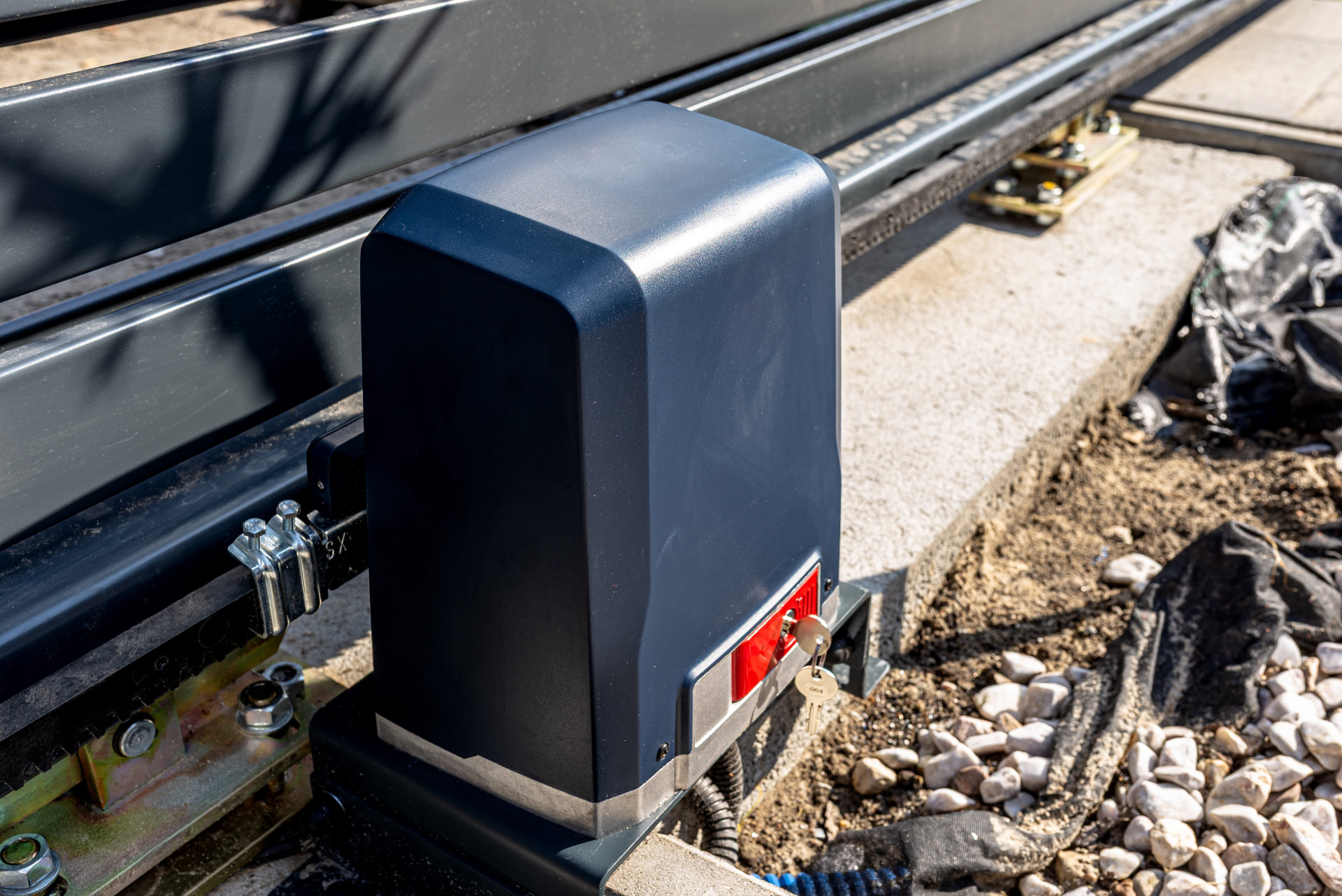
Gate automation uses powered operators and controls to move a gate, allowing authorised users to enter without opening it manually. A complete installation must address the gate structure, movement, controls and protective measures together. Adding a motor is not enough if the existing gate, supports or surrounding space make powered movement unsafe.
H.E Fire & Security supports domestic, commercial and industrial properties across Glasgow and Central Scotland. A driveway entrance may need simple visitor access, while a workplace may need separate permissions for staff and deliveries. We assess who uses the entrance, whether pedestrians share it and how the gate behaves during normal use and abnormal conditions.
An initial survey is worthwhile for a new entrance, an unreliable existing gate or a proposed conversion from manual operation. Professional assessment helps identify trapping points, structural concerns and unsuitable control choices before equipment is selected. It also provides a chance to plan emergency access and manual release arrangements, rather than discovering those questions during a power failure.
The cost of waiting
Convenience must not create an unsafe entrance
A powered gate moves a substantial structure through an area where people, vehicles and objects may be present. Risks depend on the complete entrance, not just the motor. Existing gates need assessment before an automation proposal can be considered suitable.
Crushing and trapping points
The moving leaf, posts, hinges and surrounding fences can create dangerous gaps. Protective measures must address the actual geometry and foreseeable use, including the possibility of children or visitors approaching the entrance.
Unreliable access
Poorly selected operators, damaged wiring or unsuitable controls can leave vehicles waiting or prevent the gate closing correctly. Repeatedly overriding a fault may hide the cause while reducing the protection provided by the system.
Inadequate manual release
During a power or equipment failure, users need an understood method of releasing the gate safely. A release mechanism is of limited use if nobody knows its location or can obtain the necessary key.
Weak permission management
Uncontrolled sharing of remotes or permanent access codes makes it difficult to withdraw access. The control arrangement should match how you manage residents, staff, visitors and contractors rather than relying on one shared credential indefinitely.
Common mistakes we see
- Assuming an existing manual gate is structurally suitable for automation without a survey.
- Treating a single photocell as sufficient protection for every trapping or crushing hazard.
- Increasing motor force to overcome sticking hinges instead of investigating the mechanical fault.
- Leaving manual release instructions and keys inaccessible to the people responsible for the property.
Our process
How We Deliver Gate Automation
- 01
Survey the entrance and movement risks
Our free initial site survey considers the gate, supports, ground conditions, available space and normal users. We discuss pedestrian routes, traffic patterns and known faults so the proposal responds to the complete entrance rather than just its opening width.
- 02
Design the control and safety arrangement
We identify a suitable operating approach, access controls and protective measures for the assessed risks. Your per-project quote sets out the agreed work, including any prerequisite structural repairs or other changes needed before automation can safely proceed.
- 03
Install or upgrade the agreed equipment
The work follows the agreed design and includes the relevant operators, controls and protective devices. Installation must preserve safe movement and appropriate cable routing, with users kept away from incomplete or unverified powered operation during the work.
- 04
Test movement, protection and release
We check operation and relevant safety functions, including required force assessment where applicable, obstacle-related protection and manual release. A gate moving successfully once is not sufficient evidence of safety; verification must address the identified hazards and intended operating modes.
- 05
Explain use, maintenance and warranty
We demonstrate the controls and release procedure, explain checks and record relevant handover information. New installs carry a one-year warranty, extended to three years for systems installed and maintained by H.E Fire & Security. Safe ongoing use still depends on maintenance and prompt fault reporting.
What you get
The Benefits, in Plain Terms
Smoother everyday arrivals
Suitable controls reduce the need to leave a vehicle just to open the entrance. Choosing controls around actual users makes routine access simpler without giving every visitor unrestricted permission to operate the gate.
Safety considered across the entrance
Assessment looks at moving parts, surrounding structures and people approaching from either side. This supports a protective arrangement based on real hazards rather than choosing devices only because they are commonly included in a kit.
Less strain on working components
Addressing unsuitable mechanics and matching the operator to intended use helps avoid unnecessary strain. Maintenance remains important, particularly where weather, frequent operation or impact damage affects movement and component condition.
Better-informed spending
A survey helps establish whether a gate can be retained, needs mechanical work or is unsuitable for conversion. That knowledge reduces the risk of buying an operator before discovering that essential structural or safety work was overlooked.
Access that can be managed
The right control approach makes it easier to authorise users and remove permissions when circumstances change. A planned release procedure also helps responsible users manage a fault without improvised or unsafe attempts to move the gate.
A clearer plan for faults
Knowing how to stop using an unsafe gate, release it appropriately and request help reduces uncertainty. Practical handover information is especially useful where several staff members or household users share responsibility for the entrance.
In depth
Choosing safe automatic gates for your site
Related services
Swing gates, sliding gates and existing structures
Swing gates need enough space for the opening arc and consideration of wind loading, hinges, posts and ground clearance. Sliding gates need suitable travel space and protection around the moving leaf and fixed structures. The most convenient layout is not always the safest or most practical choice for a particular entrance.
Conversion starts with the existing gate, not a motor catalogue. Sagging leaves, worn hinges, inadequate supports or damaged tracks should not be disguised by stronger powered operation. A survey helps establish whether repair, replacement or a different arrangement is needed before the automation equipment can be specified responsibly.
Safety edges, presence detection and force assessment
Powered gates can create crushing, shearing and trapping hazards. BS EN 12453 is relevant to safety in use of power-operated gates, and risk assessment must consider the complete installation. Safety measures may include appropriately selected sensing devices, protective guards and control methods, depending on the particular hazards and operating mode.
A photocell does not identify every possible danger, and adding one device does not make an unsafe entrance safe. Devices need correct positioning and verification. Changes to a gate, controller or surrounding fence can alter the risk, so later modifications should be assessed rather than treated as minor cosmetic changes with no safety implications.
Remotes, keypads, intercoms and access permissions
Remote controls can suit regular users, while an intercom can allow a visitor to request entry. Keypads and other credentials may suit different occupancy patterns. Selection should consider who can grant access, how lost credentials are handled and whether users need different permissions at different times.
Gate access can be considered alongside door entry and access control, but integration needs a defined design. A command to open the gate should not bypass the required safety functions. Discuss deliveries, visitors and out-of-hours access at the survey so those practical needs are reflected in the control arrangement rather than solved informally afterwards.
Homes, workplaces and emergency access
At a home, children, visitors and pets may approach an entrance unpredictably. At commercial and industrial properties, frequent vehicle movements and unfamiliar delivery drivers add different concerns. Where possible, consider a separate pedestrian route so people are not expected to use a vehicle opening as their everyday walkway.
A power cut or equipment failure must not leave users without an understood procedure. Battery backup, where suitable and specified, is not a substitute for safe release arrangements. We serve Glasgow, East Kilbride, Hamilton, Paisley and the wider listed Central Scotland area, with 24/7 emergency call-outs available for urgent problems.
Gate Automation Across Central Scotland
FAQ
Gate Automation Questions
We offer a free initial site survey and quote each project individually. Price depends on the existing structure, operating type, controls, safety measures and installation conditions. A conversion needing gate repairs cannot sensibly be compared with a prepared new entrance based on motor price alone.
Free site survey · No obligation
Make your entrance easier to use safely
Start with a free initial survey and an explained gate automation proposal, quoted for your property. Call 07380 866221.
4 engineers · FIA registered · £10m insured